
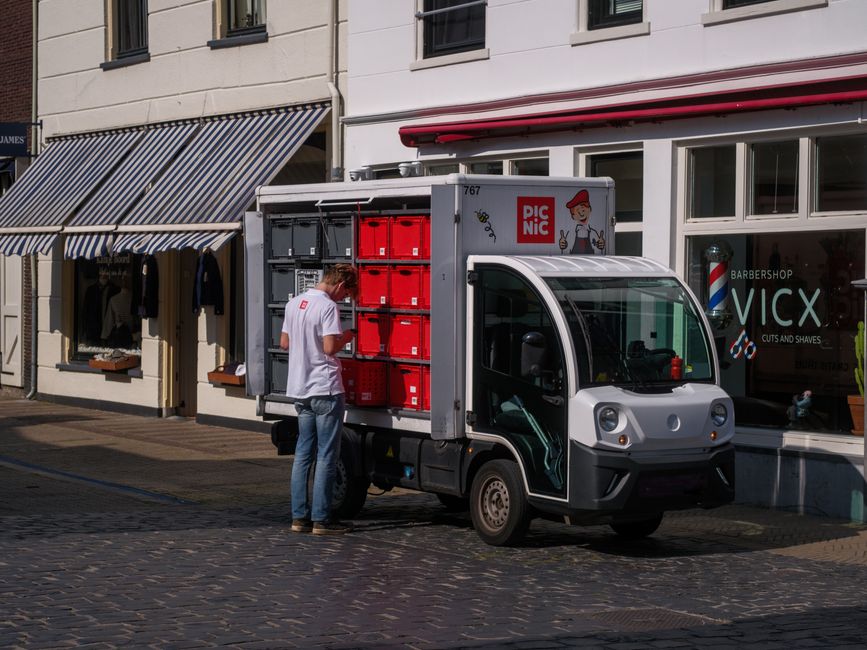
Picnic, the Netherlands-based online grocery delivery platform, has introduced a completely redesigned electric delivery cart that marks a significant upgrade to its operational infrastructure. The new vehicle represents a substantial evolution from the company’s existing fleet, incorporating enhanced capacity, extended range capabilities, and improved sustainability measures.
The rollout of the redesigned carts began in Haarlem, with the company initiating a gradual replacement cycle for its nearly 5,000 existing electric carts currently operating across the Netherlands, Germany, and France. This transition reflects Picnic’s commitment to modernizing its last-mile delivery operations while maintaining its distinctive brand identity.
Technical Improvements and User Experience
The new generation of delivery carts features several notable enhancements compared to their predecessors. The vehicles boast a larger load capacity, allowing drivers to transport greater quantities of groceries per route, potentially improving delivery efficiency and reducing the number of trips required. The extended range capability addresses a key limitation of earlier models, enabling delivery personnel to cover greater distances on a single charge.
Beyond functional improvements, the redesigned carts incorporate features aimed at enhancing driver comfort and safety. Heated seats provide improved working conditions during colder months, while modular components allow for easier maintenance and repairs. The vehicles are equipped with enhanced safety systems designed to protect both delivery personnel and pedestrians during urban operations.
According to Nina Ebbing, speaking on the redesign process: “It is a completely new design, but the friendly appearance of the carts has remained.” This statement underscores Picnic’s intention to maintain brand continuity while delivering substantive technological upgrades to its delivery infrastructure.
Operational Flexibility and Sustainability
One particularly noteworthy feature is the capability for remote software adjustments that allow operators to configure cart performance based on weather conditions and other environmental factors. This technological flexibility enables Picnic to optimize operations across the various climate zones covered by its service areas in the Netherlands, Germany, and France.
The sustainability focus of the new design aligns with broader European trends toward decarbonizing urban logistics. Electric delivery vehicles have become increasingly central to achieving climate targets in city centers, with numerous municipalities imposing restrictions on fossil fuel-based last-mile delivery operations.
Broader Ecosystem Implications
Picnic’s investment in fleet modernization reflects competitive pressures within the European quick-commerce and online grocery delivery sector, where operational efficiency and sustainability have become key differentiators. As European cities continue implementing stricter environmental regulations and congestion charges, companies operating electric delivery networks position themselves advantageously compared to competitors relying on traditional vehicles.
The gradual replacement approach adopted by Picnic suggests a measured scaling strategy, allowing the company to validate new cart performance across varied operational conditions before completing the full fleet transition. This methodology provides valuable data for optimizing operations and addresses potential supply chain considerations for manufacturing and deploying thousands of vehicles across multiple countries.