
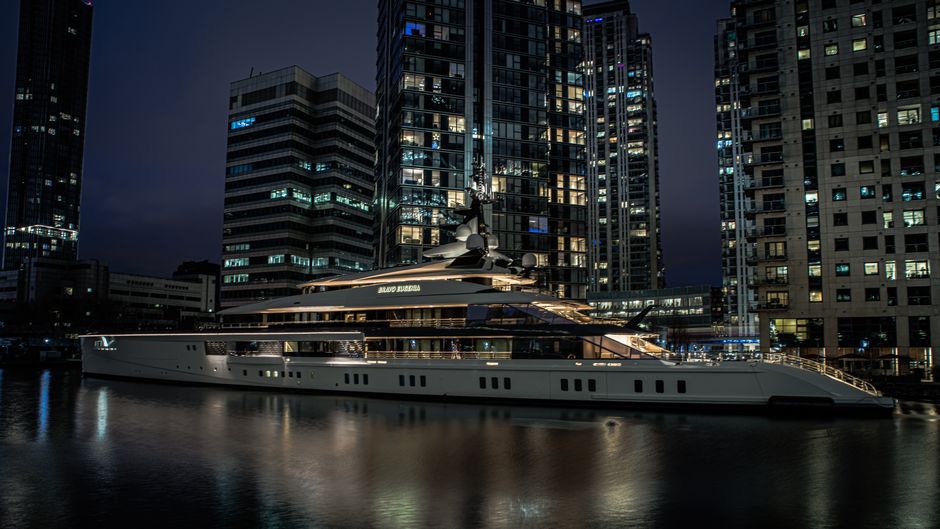
PowerUP Energy Technologies, an Estonian developer of hydrogen fuel-cell generators, has announced a strategic partnership with H2Boat, an Italian marine hydrogen startup, to create an integrated power system designed to eliminate diesel generators from yachts and other vessels.
The collaboration combines PowerUP’s PEM fuel-cell generator technology with H2Boat’s onboard hydrogen production capabilities and metal-hydride storage systems. The resulting solution enables vessels to produce hydrogen from renewable electricity, store it safely onboard, and convert it back into emission-free electricity on demand.
H2Boat, a spin-off from the University of Genoa, brings specialised expertise in marine hydrogen generation and storage technologies developed through academic research. The partnership leverages complementary strengths, with PowerUP contributing proven fuel-cell conversion technology and H2Boat providing the hydrogen production and storage components needed for a complete vessel power system.
Addressing a fundamental industry contradiction
The partnership directly addresses a long-standing tension within the luxury yacht industry. While modern vessels increasingly feature silent, environmentally conscious cruising capabilities, operators have traditionally relied on noisy, polluting diesel backup generators for harbour manoeuvres and emergency power situations.
“For too long, there has been a glaring contradiction in our industry. You enjoy this silent, green yachting experience, yet when you need to manoeuvre into the harbour or require backup power, you have to fire up a noisy, polluting diesel generator that instantly ruins the magic. With this partnership, we are finally eliminating that compromise,” said Ivar Kruusenberg, commenting on the collaboration.
Broader decarbonisation implications
The integrated system targets a sector where emissions reduction remains challenging. Maritime vessels, particularly pleasure craft and support vessels, currently lack practical zero-emission alternatives to conventional generators. The PowerUP and H2Boat solution addresses this gap by providing a technically viable pathway for operators seeking to reduce their environmental footprint without sacrificing operational reliability.
The partnership reflects growing momentum within the European cleantech ecosystem around hydrogen-based energy solutions. Maritime applications represent a particularly attractive market segment, as vessels operate in contained environments where hydrogen safety protocols can be strictly implemented, and where the benefits of silent, emission-free operation carry measurable commercial and environmental value.
Both companies are positioned within emerging European hydrogen infrastructure, capitalising on increased investment in fuel-cell technologies and the EU’s broader decarbonisation objectives for transportation sectors. The marine industry’s unique characteristics—regulatory pressure, wealthy operator demographics, and technical constraints—create conditions where hydrogen solutions can gain early adoption before scaling to broader transport applications.
The collaboration demonstrates how specialised cleantech companies across European markets are increasingly combining complementary technologies to address specific sectoral challenges rather than competing for overlapping capabilities.