
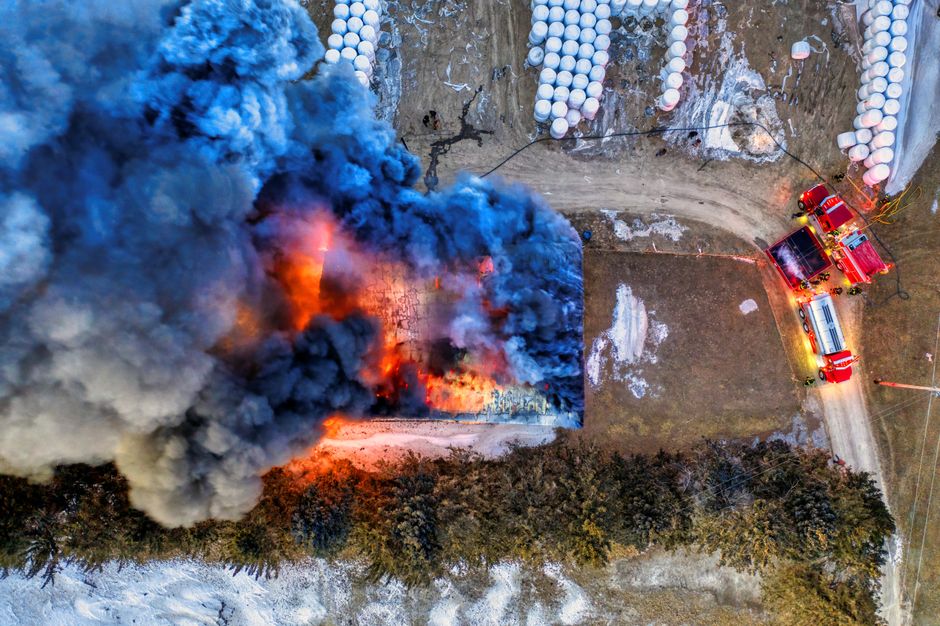
CLUE Technologies, a Spanish cleantech company, has received funding from the Centro para el Desarrollo Tecnológico Industrial (CDTI) to advance development of an unmanned aerial platform designed specifically for wildfire suppression and intervention.
The initiative, known as the EXTINCIA project and coordinated by CLUE Technologies, represents an emerging approach to addressing the continent’s escalating wildfire challenge through technological innovation. The project integrates multiple advanced technologies to create a comprehensive aerial firefighting system.
Combining Multiple Technologies for Wildfire Response
The EXTINCIA platform combines three core technological components: unmanned aerial vehicles (UAVs), artificial intelligence systems, and advanced air traffic management infrastructure. This integrated approach aims to enhance response capabilities during critical fire events when conventional ground-based methods face limitations.
TECNALIA, a research organization involved in the project, has designed and validated an electric unmanned aerial vehicle with significant capacity for wildfire intervention operations. The platform relies on electric propulsion rather than traditional fuel sources, aligning with broader European decarbonization objectives in emergency response infrastructure.
The artificial intelligence component enables autonomous decision-making and operational optimization, while the advanced air traffic management systems address the coordination challenges that arise when deploying multiple aerial assets in dynamic wildfire scenarios. These systems must operate safely alongside conventional firefighting aircraft and helicopters already deployed during major incidents.
Addressing European Wildfire Challenges
Europe has experienced unprecedented wildfire activity in recent years, with 2023 marking particularly severe seasons across Mediterranean and Central European regions. Climate patterns have extended fire seasons and intensified conditions, creating urgent demand for innovative suppression technologies that can operate where terrain, weather, or access limitations restrict traditional approaches.
The electric UAV approach offers potential advantages in terms of operational cost, reduced environmental impact, and the ability to conduct sustained operations without refueling delays. The integration of AI systems could optimize deployment patterns and improve targeting accuracy during intervention efforts.
The development effort funded through this CDTI grant contributes to Spain’s positioning as a technology innovator within European emergency response sectors. Spanish cleantech companies have increasingly focused on environmental challenges, with drone technology and AI representing growth areas in the broader innovation ecosystem.
Emerging Ecosystem Trends
This project reflects broader European trends toward technology-driven solutions for climate adaptation and disaster management. Across the continent, startups and research institutions are exploring how autonomous systems, artificial intelligence, and advanced sensing technologies can enhance response to natural disasters exacerbated by climate change. The CDTI’s support for the EXTINCIA project demonstrates institutional recognition of technology innovation’s role in addressing critical infrastructure and environmental protection challenges facing modern Europe.