
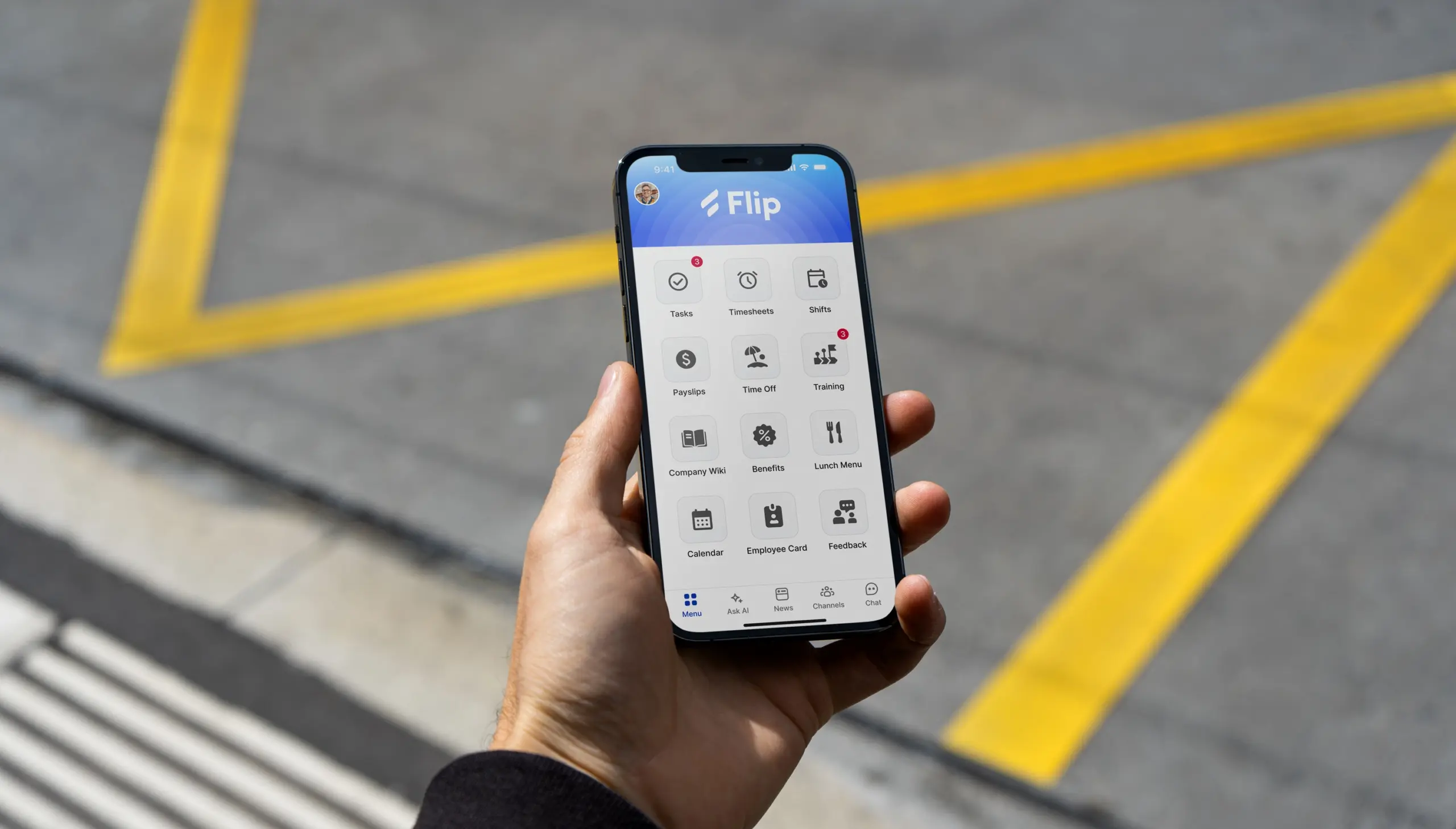
The employee experience startup has secured new funding from Notion Capital, HV Capital and L-Bank as it looks to bring AI tools and digital access to workers in retail, manufacturing, logistics, care and other frontline industries.
Flip, an employee experience software company focused on frontline and deskless workers, has raised €22 million in new funding as it seeks to expand the use of artificial intelligence across sectors where employees have traditionally had limited access to workplace technology.
The round includes additional investment from existing backers Notion Capital and HV Capital, alongside new investor L-Bank, the development bank of the German state of Baden-Württemberg. A group of business angels and institutional investors also participated.
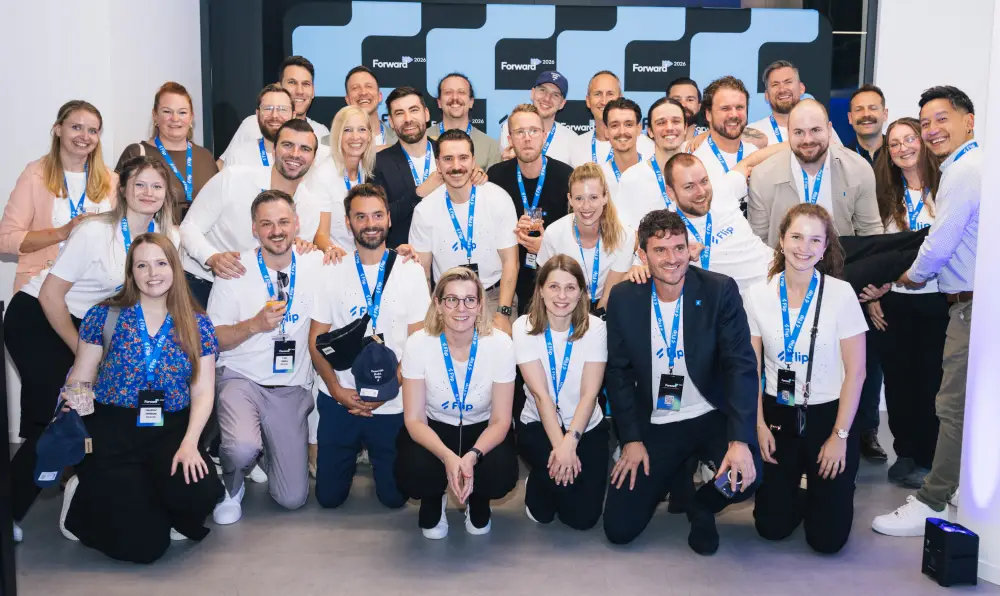
Founded in Stuttgart in 2018, Flip develops a platform combining employee communication, workflows, digital identity and AI tools for workers who do not spend most of their working day at a computer. The company has offices in Germany, the UK and the US and employs around 150 people.
Flip says its technology is currently used by more than two million people worldwide, with over 1,000 brands using the platform. Customers include Bosch, REWE, APCOA, FORVIA HELLA and Greif.
Bringing AI to frontline workers
The latest funding comes amid growing interest in how generative AI can be applied beyond traditional office environments.
While tools such as AI assistants, copilots and automated knowledge-management systems have become increasingly common among knowledge workers, adoption has been slower among employees working in factories, stores, warehouses, hospitality venues and care environments.
Flip is positioning itself around that gap.
The company argues that one of the main obstacles is not necessarily demand for AI, but the underlying digital infrastructure available to frontline employees. Many deskless workers do not have corporate email accounts, individual software licences or straightforward access to their employer’s internal systems.

“AI has long been part of everyday life in the office but, on the assembly line, in stores, or in care settings, it has barely arrived,” said Benedikt Brand, co-founder and CEO of Flip.
According to Brand, providing frontline employees with digital identities and access to company systems is an important first step before AI-based tools can be integrated into everyday operational work.
The new capital will be used to develop the infrastructure behind Flip’s platform and expand its AI capabilities.
Flip bets on custom AI-generated workplace apps
One of the main products behind the company’s next phase of expansion is Fusion, a system designed to generate customised applications for frontline teams.
Rather than requiring companies to purchase standard workplace software and then spend time adapting it to their organisation, Flip says Fusion can create applications based on the needs of a specific team, store or operational process.
The approach reflects a broader shift in enterprise software, where generative AI is increasingly being used to create interfaces, workflows and applications dynamically rather than relying solely on predefined software products.
Flip has also introduced Frontline Identity, a feature launched in June that allows employees to access workplace systems without requiring a traditional corporate email address.
For employers with large numbers of hourly, seasonal or distributed workers, identity management has historically been one of the barriers to rolling out digital services across an entire workforce.
By combining identity, communications and AI tools in one platform, Flip is aiming to become an infrastructure layer for companies looking to digitise frontline operations.
Enterprise adoption across multiple markets
The company points to industrial packaging group Greif as one example of how its platform is being deployed.
According to figures provided by Flip, Greif recorded 85% adoption during an initial pilot, with 74% of users remaining active on a weekly basis and an average user satisfaction score of 4.3 out of five.
The platform has since been expanded to more than 100 Greif sites across 15 countries.
German automotive parts distributor Europart, meanwhile, has used Flip since 2021. The company employs around 2,000 people across approximately 300 locations in 28 countries and is using the platform for functions including AI-assisted knowledge management.
These deployments illustrate the market Flip is targeting: large organisations with geographically dispersed workforces where many employees have little or no regular access to a desktop computer.
Existing investors increase their backing
Notion Capital, the London-based venture capital firm that first invested in Flip in 2022, is increasing its stake as part of the new round.
Jos White, General Partner at Notion Capital, said the firm had seen Flip establish a strong position in enterprise markets in Europe and the US and believes AI tools for frontline teams could develop into a significant software category.
HV Capital is also participating again. Fabian Gruner, Partner at HV Capital, pointed to Flip’s enterprise execution across different markets and its focus on helping companies digitally connect frontline employees.
The involvement of existing investors alongside L-Bank suggests the company’s next phase will focus on scaling rather than substantially changing its core market.
AI’s next workplace frontier
The wider opportunity is significant. Frontline employees make up the majority of the global workforce, but workplace software has historically been designed primarily for people with laptops, company email addresses and permanent access to enterprise systems.
As businesses invest heavily in generative AI, that divide is becoming increasingly relevant.
For companies such as Flip, the opportunity is therefore not simply to introduce another AI assistant. It is to provide the identity, access and workflow infrastructure required before AI can become useful to employees outside an office environment.
Whether frontline AI adoption develops as rapidly as it has among knowledge workers remains uncertain. Deployments in manufacturing, logistics, healthcare and retail can involve additional challenges around security, training, hardware access and integration with existing operational systems.
But the new €22 million funding round gives Flip additional resources to pursue a market that enterprise software companies are increasingly paying attention to: bringing the benefits of AI to workers who have so far had relatively little exposure to the technology.