
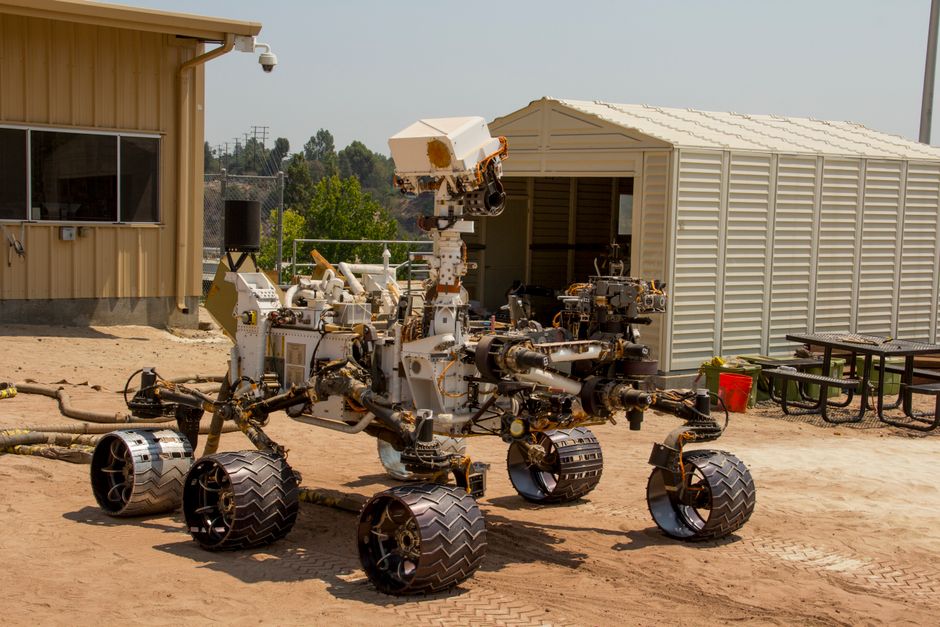
Astronika, a Polish space technology company, has successfully completed a series of rigorous tests validating its proprietary descent system designed for the European Space Agency’s Rosalind Franklin rover. The achievement marks a significant moment for Poland’s emerging space sector and represents progress toward one of Europe’s most ambitious planetary exploration missions.
The descent system, a critical component that will safely lower the rover to the Martian surface, underwent demanding performance evaluations to ensure reliability in the harsh conditions of space exploration. Astronika’s technology demonstrated the capability to meet ESA’s stringent requirements, clearing the way for integration into the Rosalind Franklin mission architecture.
A Polish Contribution to European Space Ambitions
The successful completion of these tests underscores the growing role of Polish companies within the broader European space ecosystem. Rather than relying entirely on established aerospace contractors, the ESA has increasingly turned to specialized technology firms to develop specific mission components, creating opportunities for innovation-focused startups across the continent.
Astronika’s involvement in the Rosalind Franklin project highlights how European space agencies are broadening their supply chains beyond traditional defense and aerospace giants. The approach accelerates technological development while supporting the emergence of new commercial players in the space sector.
The Rosalind Franklin Mission Context
The Rosalind Franklin rover represents a cornerstone of the ExoMars program, a joint initiative between the ESA and Russia’s space agency that aims to search for signs of ancient microbial life on Mars. The rover’s sophisticated instrumentation requires equally sophisticated deployment systems, making the descent mechanism a mission-critical component requiring extensive validation before launch.
The rover’s ability to drill deeper into the Martian subsurface than previous missions makes it uniquely suited for detecting biosignatures protected from the planet’s harsh radiation environment. Astronika’s descent system must reliably execute its function within strict parameters, as mission failure rates in planetary exploration remain consequential despite technological advances.
Implications for Europe’s Space Sector
The test completion signals that European space programs continue to develop robust capabilities across multiple technological domains. As competition in space exploration intensifies globally, the ability to rapidly advance and validate specialized systems provides strategic advantages for missions planned across the coming decade.
For Astronika specifically, this validation opens pathways to potential future contracts, both within ESA missions and potentially within the emerging commercial space market. European startups increasingly recognize that government space programs can serve as anchor customers validating technologies that later find applications in commercial ventures.
The success also demonstrates Poland’s capacity to contribute meaningfully to European space infrastructure, a sector historically concentrated in a handful of nations. As more member states develop indigenous space capabilities, the European space ecosystem becomes more distributed and resilient.
Astronika’s achievement represents one component in Europe’s broader effort to maintain technological autonomy and competitive capability in space exploration during an era of intensifying global competition in the sector.