
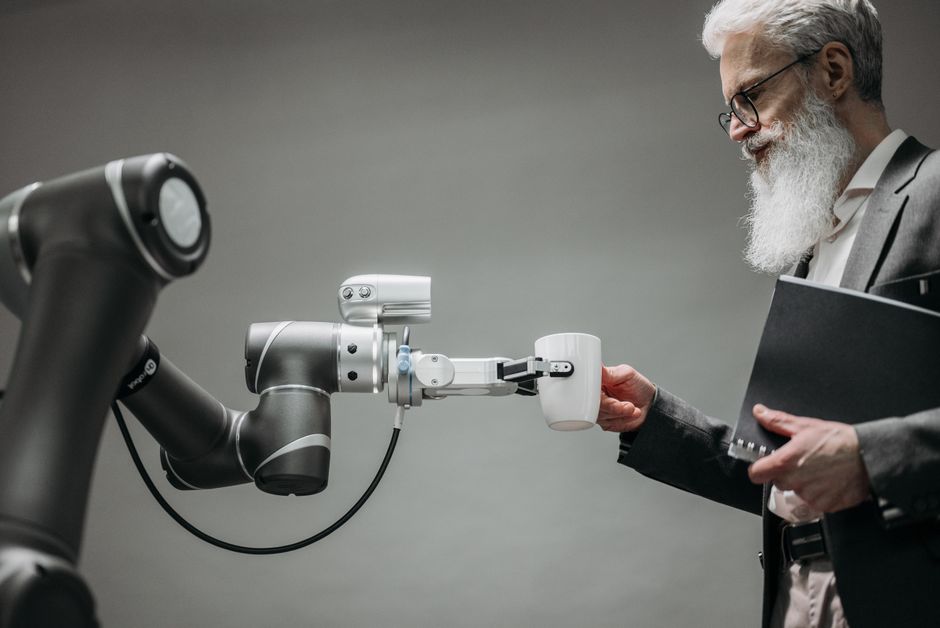
Genesis AI, a French robotics company, has announced a €425 million Series A funding round, bringing its valuation to approximately €3 billion. The capital injection represents a significant milestone for the firm as it moves to accelerate manufacturing of its Eno wheeled robot and expand deployments across industrial facilities worldwide.
The funding will primarily support scaling production capacity and commercializing the Eno platform in diverse operational environments. Genesis AI plans to target three key market segments with the robot: manufacturing plants, warehouse and logistics operations, and scientific laboratories. This diversified deployment strategy reflects growing demand for autonomous mobile robotics across multiple industrial verticals seeking to improve efficiency and operational continuity.
Capitalizing on Industrial Robotics Demand
The robotics sector has experienced substantial investor interest in recent years as enterprises increasingly recognize the potential of autonomous systems to address labor shortages and enhance productivity. The Eno platform represents a significant engineering effort to create a flexible, wheeled robot capable of navigating complex indoor environments while performing varied tasks. The substantial funding round underscores investor confidence in Genesis AI’s technology and market positioning.
The company’s focus on wheeled robotics distinguishes it within a competitive landscape that includes numerous competing approaches to industrial automation. By concentrating development resources on a single platform optimized for multiple use cases, Genesis AI aims to achieve economies of scale while maintaining the flexibility required across different industrial applications.
Strategic Expansion Phase
This Series A funding marks Genesis AI’s transition from development into aggressive market expansion. The capital will support not only manufacturing scaling but also the infrastructure necessary for widespread commercial deployment. Building out supply chains, establishing service networks, and expanding engineering teams are typically critical components of this growth phase for hardware-focused robotics companies.
The company’s choice to focus on factories, warehouses, and laboratories reflects pragmatic assessment of near-term market opportunities. These sectors face acute operational challenges around automation, and organizations within them typically possess both the financial resources and technical sophistication to implement complex robotic systems effectively.
European Robotics Innovation
Genesis AI’s success reflects ongoing strength within Europe’s robotics and AI sectors, where multiple companies have achieved significant scale and investment momentum. France in particular has developed a notable ecosystem supporting advanced manufacturing and robotics innovation, supported by substantial government investment and university research programs.
The startup’s €425 million raise positions it among Europe’s most well-funded robotics ventures and suggests sustained confidence in the continent’s ability to develop world-class autonomous systems technology. As industrial automation continues accelerating globally, particularly in response to labor market pressures and competitive manufacturing demands, European robotics companies like Genesis AI play an increasingly important role in shaping how factories and logistics operations function in coming decades.